Carl M. Shy, In Memoriam
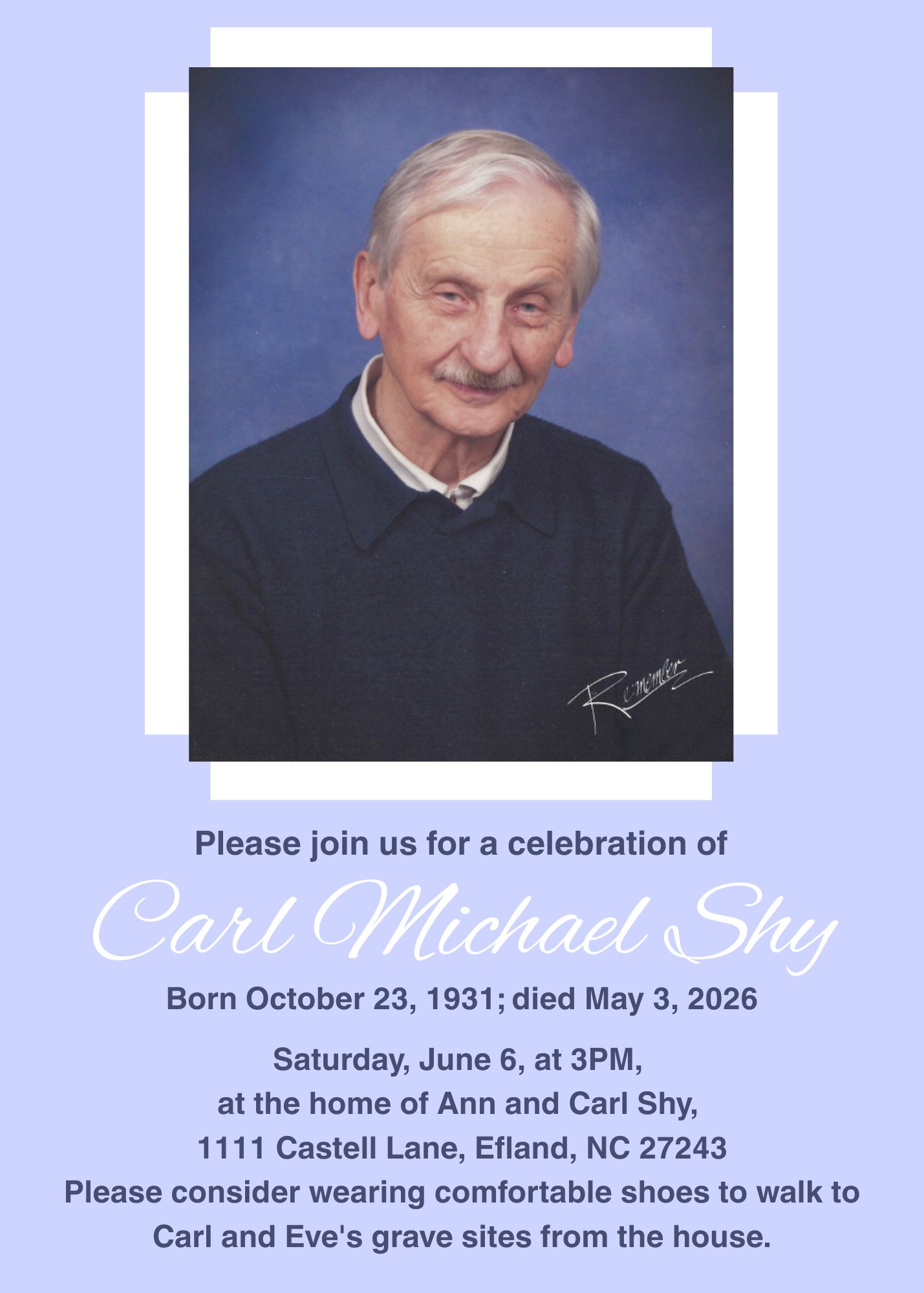
- Up one level
- Gillings School remembers generational environmental epidemiologist Carl ShyJune 2, 2026. Includes tributes from Karin Yeatts, Andy Olshan, and Diane Marie St. George
- Celebration of Life recording (36 min.)
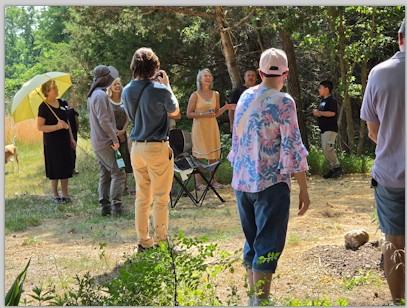 June 6, 2026. Recording by Danny Alexander.
- Remembrances sent to Nancy Colvin or posted on her Facebook page
- (new)
Harvey Checkoway (6/21/2026):
Carl was a wonderful person and outstanding mentor. His guidance and encouragement led me to pursue an academic career as an occupational epidemiologist.
- (new)
David Savitz (6/21/2026):
I remember first meeting Carl as an aspiring applicant to the doctoral program (yes, in the dark ages) and approaching him at an SER meeting. He could not have been more gracious and approachable, and through the process of eventually applying for a faculty position (Carl chaired the search committee), joining the Department, and ultimately serving as Chair, Carl was consistently supportive, respectful, and selfless. As a scholar, leader, and valued colleague, he was devoted to advancing science, public health, and communal well-being, never distracted by his own ego. He epitomized the best in UNC, cutting-edge academic work in a humane environment.
-
Ken Mundt:
I'd be happy to contribute to a scholarship or whatever might be set up to memorialize Carl and all of the lives he enriched over his long and productive life. We are blessed to have been part of that!
-
Joanna Smith:
I was Carl's programmer in the early 1980s. He and Eve were two of the finest people I knew.
-
Sherman James:
He is such a good human being - always treating everyone with kindness and respect.
-
Azadeh Stark:
I have so many pleasant memories of him and our department.
-
Fredrika Alexander:
He was a kind leader and teacher.
-
Kwanjai Amnatsatsue:
Rest In Peace, he was such a great teacher in Epidemiology department, he will be missed…
-
Volker Arndt:
I am sorry to learn of the passing of my supervisor (1996).
-
Marty Stebbins:
A good person and great epidemiologist
-
May Baydune:
May his soul Rests in Peace...
-
Steve Browning:
Honestly think of him every week and grateful to have known him.
-
Frances Tseng:
Dr Shy is a kind and gentle teacher.
-
Nitaya Vajanapoom:
I am so sorry to hear this Nancy. He was very kind professor I ever had, and I am grateful to be his advisee. May your soul rest in peace, Dr. Shy.
-
Melissa McPheeters:
Oh wow. What a kind and lovely man he was!
-
Christine Parks:
Thanks for sharing, Nancy. I remember him fondly.
-
Richard Kwok:
Please keep us posted about the celebration. He was such a kind and caring soul. He will definitely be missed!
-
Michelle Mendez:
He was such a wonderful and inspiring person, will remember him so warmly.
-
Luenda Charles:
Oh my!! He was such a gentle, kind man and an outstanding professor. He will surely be missed!
- (new)
Harvey Checkoway (6/21/2026):
- Paige TolbertCarl was a wonderful mentor, colleague and friend. He had enormous impact on those lucky enough to interact with him directly and on the wider community through his public health contributions. He inspired me and countless others to commit to careers in environmental epidemiology, always with a kind and supportive helping hand gently holding us to high standards. Ever humble, he was a role model for how to be a positive force in this world. Over the decades, we stayed in touch and I always looked forward to his long, hand-written letters full of reflection and wisdom. He will be dearly missed.
Paige Tolbert, Professor Emerita
Rollins School of Public Health, Emory University
PhD, Epidemiology, UNC-CH, 1989 (advisor: Carl Shy) - Tribute by Doug DockerySo sorry to hear of Carl's passing. He was a giant in the field of air pollution epidemiology and a great friend and colleague.
Carl indeed played a major role in the requirement for catalytic converters in cars. His work on the health effects of nitrogen dioxide in the CHESS studies was important in the decision to require catalytic converters to control nitrogen oxide emissions, as well as carbon monoxide and volatile organics. More important was his work identifying the health effects of lead in gasoline. Note that catalytic converters were not required to control lead emissions. However, lead was removed from gasoline because it contaminated the catalytic converter. This secondary effect of removing lead from gasoline was one of the great public health triumphs of the 1980s.
As described in the article by Bridbord and Hanses, Carl was instrumental in identifying the harmful effect of lead and advocating for its removal from gasoline: "This proposed regulation for lead in gasoline was based upon the document 'Health Hazards of Lead' principally authored by Carl Shy, a senior physician scientist at the U.S. EPA in North Carolina (U.S. EPA 1972a, 1972b). Because this proposal went against conventional wisdom, Hanson had difficulty finding scientists willing to publicly support a health-based regulation. Shy was one of the first physicians to come forward and publicly support regulation of lead in gasoline even though at this time there were few published studies to back him up."
Douglas W. Dockery, ScD, ISEE-Fellow
Loeb Professor of Environmental Epidemiology, Emeritus
Department of Environmental Health, Harvard Chan School of Public Health - Dr. Carl M. Shy – Gentleman EpidemiologistTribute by David F. Goldsmith, Deborah M. Winn, Lorraine K. Alexander.
Dr. Carl Michael Shy, MD, DrPH, was a distinguished American physician, epidemiologist and public health educator with a long career in preventive medicine and academic leadership. He was Professor and Professor Emeritus in the Department of Epidemiology at the University of North Carolina (UNC) Gillings School of Global Public Health, in Chapel Hill, NC, where he served for over three decades, including three years as Epidemiology Department chair. He was born October 23, 1931 and died May 3, 2026. He began his studies with an eye to being a minister, but veered to medicine and public health. He graduated from Marquette University School of Medicine in 1962, followed by completing his DrPH from the University of Michigan in 1967.
. . . This remembrance is designed to share his contributions to environmental and occupational epidemiology first from the perspective of his work as an educator and his public health impact more broadly, and then from the recollections from two students whose doctoral work Dr. Carl Shy supervised. . . ." (read the complete tribute)
- Andy Rowland, PhDI am so sorry we lost him. But it is a blessing that he was ready and there were so many people that loved him . . He will always be a role model for me. . . I have not seen Carl in many years and regret that but I am so grateful for all his mentoring and support. Academia can be a rat race at times but Carl was such a model of kindness and compassion and so brilliant. I am forever grateful to him.
(read the complete tribute) - Victor Schoenbach, PhDCarl was a wonderful professor and colleague. I met him when I enrolled in the UNC Department of Epidemiology as a doctoral student in fall 1977. I still recall how helpful I found the guest lecture he gave in the EPID160 introductory epidemiology course that semester. Although we did not collaborate on any research projects, in fall 2001 I inherited the classroom EPID160 course from him and in summer 2002 the Internet course that he and Lorraine Alexander created. Teaching a required course to hundreds of students not majoring in epidemiology brought home to me what a huge service he had given to the Department and the School.
Carl was a full contributor to any committee or other activity he undertook. He also enthusiastically participated in the holiday party skits that Joyce Allen and Marilyn Vine wrote. When the the Michael Hooker Research Center was dedicated in 2005, he joined in donating to an engraved glass panel honoring the School's Minority Student Caucus.
I have admired, appreciated, respected, and learned so much from Carl during nearly the half-century since I met him – he will always be a part of my life.
Remembrances
About Carl Shy: https://go.unc.edu/CarlShy